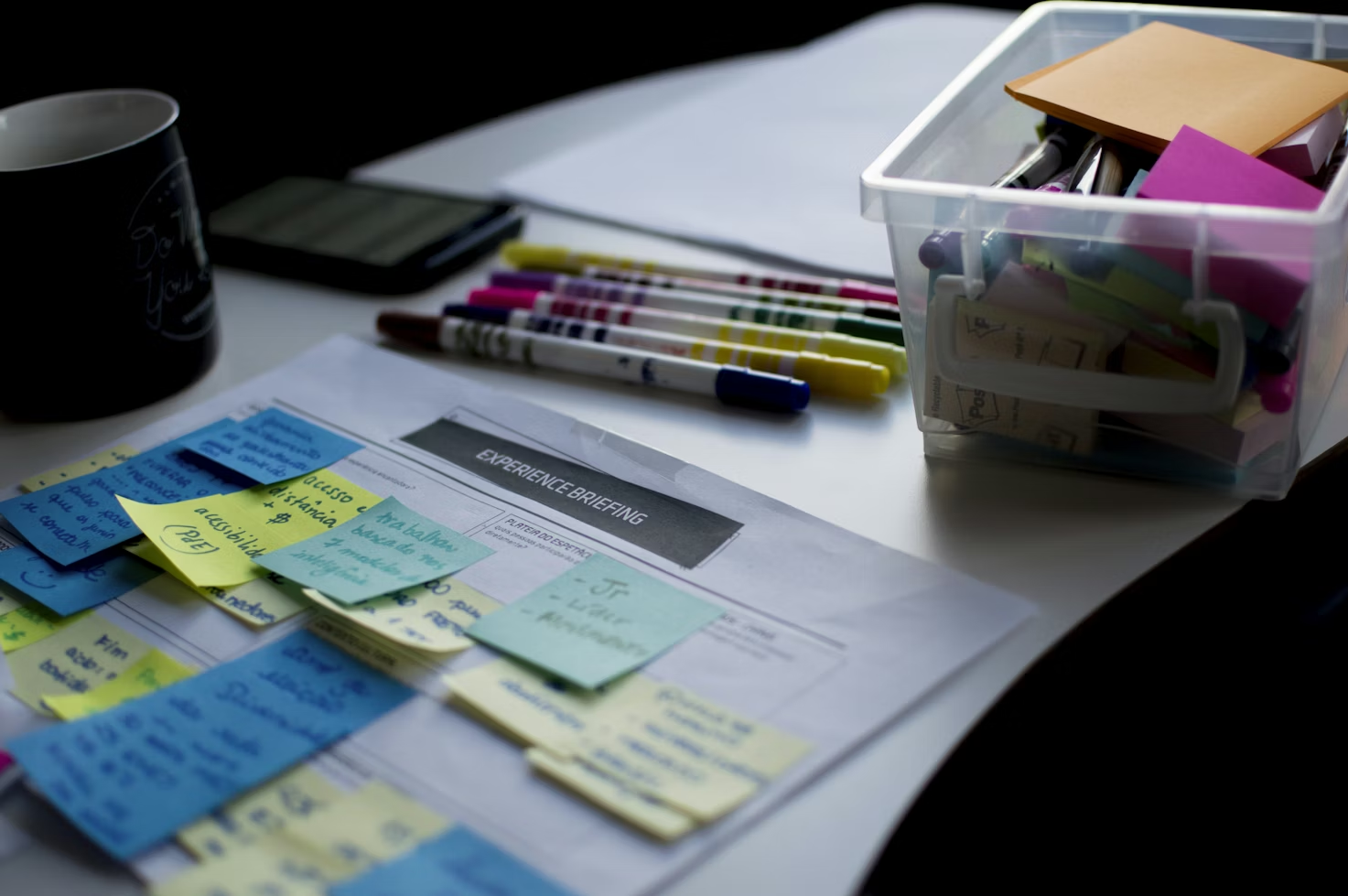
The myth of the perfect brief
There's a persistent idea in our industry that great work starts with a great brief. A tightly scoped document lands on your desk, you follow the instructions, and a beautiful brand pops out the other end.
That's not how it works. Not even close.
The best projects we've ever delivered didn't start with a perfect brief. They started with a honest conversation. A client who was willing to say "I don't know exactly what I want, but I know what isn't working." That vulnerability is where the magic starts.
What we actually need from you
When a new client reaches out, we don't hand them a 40-question form and wait for the answers. Instead, we book a call and ask three things:
- What's the problem? Not "what do you want us to build" — what's actually broken? Why are you reaching out now and not six months ago?
- Who are you trying to reach? Not a demographic spreadsheet. Tell us about the last customer who made you think "yes, this is exactly who we're for."
- What does success look like? Not vanity metrics. If we nailed this project, what would be different about your business in 12 months?
Everything else — the sitemap, the colour preferences, the competitor list — that comes later. And honestly, half of it changes once we start digging into the real problem.
The brief is a living thing
One of the biggest mistakes we see is treating the brief like a contract. Something that gets signed off in week one and never touched again.
Our briefs evolve. We write an initial strategy document after our discovery phase, but it's designed to be challenged. When we present our first round of brand concepts, the brief often shifts. Not because we got it wrong — because the client now has something tangible to react to, and that reaction reveals what they actually care about.
A client once told us they wanted "modern and minimal." Three rounds in, what they actually wanted was warmth and personality with clean execution. Those are very different things. But we'd never have got there if we'd treated "modern and minimal" as gospel from day one.
The collaboration that built Oriva
Our recent work with Oriva is a good example. They came to us knowing they needed an eCommerce store, but the real brief wasn't about Shopify templates or product page layouts. It was about translating the feeling of handling a beautifully crafted piece of jewellery into a digital experience.
That insight didn't come from a brief document. It came from visiting their workshop, watching how they talked about their pieces, noticing the way they handled each ring like it was the only one they'd ever made. We couldn't have designed the right thing without that context.
The warm colour palette, the generous whitespace, the way product images breathe on the page — none of that was in the original brief. It came from understanding the brand at a deeper level than "luxury jewellery, target audience 25-45, likes gold."
What bad collaboration looks like
Let's be honest about the other side too. We've had projects go wrong, and it's almost always for the same reasons:
Design by committee. When feedback comes from six different stakeholders with six different opinions, and nobody has the authority to make a decision. The work gets diluted until it's inoffensive to everyone and exciting to nobody.
The big reveal. When a client goes dark for three weeks, we build something based on our best understanding, then present it to a room full of people seeing it for the first time. Surprise presentations kill good work. We share progress constantly — rough, unfinished, ugly progress — because early feedback is cheap and late feedback is expensive.
Spec-driven thinking. "We need 8 pages, a blog, a contact form, and it needs to be in blue." That's a shopping list, not a brief. When clients lead with specifications instead of problems, we end up building exactly what they asked for — which is rarely what they actually needed.
How we structure the first two weeks
Here's what our discovery process actually looks like:
Week 1 — Listen. We run a 90-minute strategy session. Sometimes it's on a call, sometimes we visit in person. We ask a lot of questions and take a lot of notes. We're not designing anything yet. We're trying to understand the business, the market, the audience, and the ambition.
Week 2 — Synthesise. We turn that conversation into a strategy document. Not a 50-page deck — usually 4-6 pages covering the core problem, the audience, the positioning, and our recommended approach. We present this back to the client and have a real conversation about it.
Only then do we start designing. And by that point, we're not guessing. We know what we're solving for, who we're designing for, and what success looks like. The work is better, the feedback is sharper, and the whole project moves faster.
The uncomfortable truth
The best client-agency relationships require something that most people find uncomfortable: trust.
Trust that we'll push back when your idea isn't right. Trust that we'll explore directions you didn't ask for. Trust that the first round won't be perfect, and that's by design.
In return, we trust that you'll be honest. That you'll tell us when something doesn't feel right, even if you can't articulate why. That you'll make decisions and stand behind them.
That mutual trust is the actual brief. Everything else is just paperwork.
What this means if you're thinking of working with us
If you're reading this and thinking about reaching out, here's my advice: don't spend weeks perfecting a brief document. Just tell us what's going on. What's working, what isn't, and where you want to be.
We'll figure out the rest together. That's literally the job.